390+ Names That Mean Broken: Meaningful Names For Shattered, Sorrowful & Healing Stories
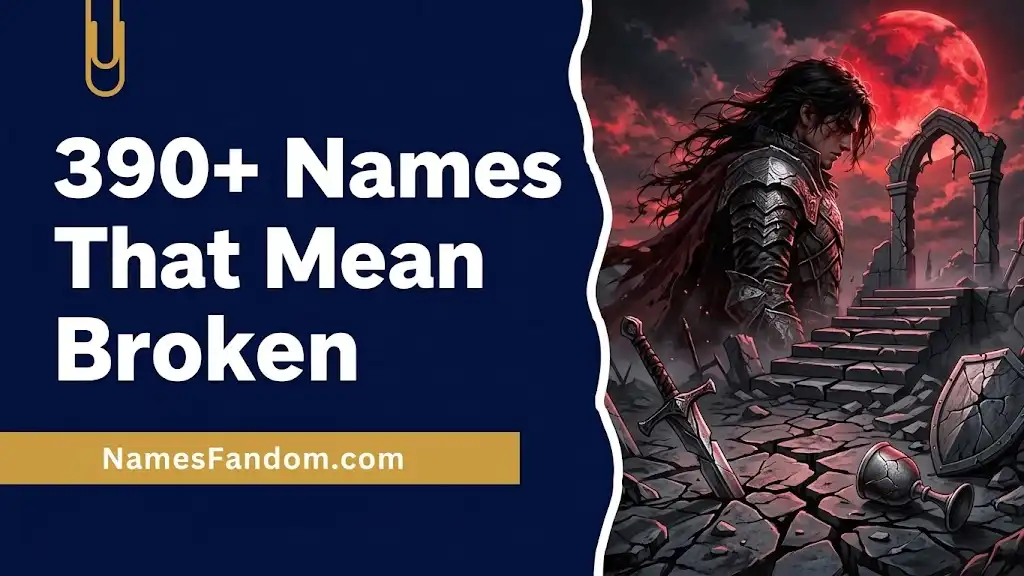
The journey of healing often begins with acknowledging our brokenness, making the topic of Names That Mean Broken both poignant and powerful. With over 390 unique names, this compilation serves as a reminder that through pain and sorrow, there is potential for strength and renewal.
Each name carries a story, resonating with individuals who seek depth and meaning in what it represents. In this article, you will discover not only the significance of these names but also the healing narratives they can inspire.
Names That Literally Mean Broken
Some names have meanings directly connected to being broken, damaged, divided, or undone. These unusual choices can represent hardship, vulnerability, or a life shaped by difficult experiences.

- Kas-tziden – “broken foot” (Apache)
- Maskepetoon – “broken arm” or “crooked arm” (Cree)
- Alphecca – “the broken,” from an Arabic phrase about a broken ring of stars (star name)
- Tấm – “broken rice” (Vietnamese folklore heroine)
- Röfn – possibly “broken, severed” (Icelandic; meaning uncertain)
- Briste – “broken” (Irish/Scottish Gaelic)†
- Brocen – “broken” (Old English)†
- Brotinn – “broken” (Old Norse)†
- Gebrochen – “broken” (German)†
- Zerbrochen – “shattered, broken apart” (German)†
- Kaputt – “broken, ruined” (German)†
- Gebroken – “broken” (Dutch)†
- Bruten – “broken” (Swedish)†
- Sönder – “broken, in pieces” (Swedish)†
- Ødelagt – “broken, ruined” (Danish/Norwegian)†
- Brisé – “broken” (French)†
- Cassé – “broken” (French)†
- Roto – “broken” (Spanish)†
- Quebrado – “broken” (Spanish/Portuguese)†
- Partido – “split, broken” (Spanish/Portuguese)†
- Rotto – “broken” (Italian)†
- Infranto – “shattered” (Italian)†
- Spezzato – “snapped in two” (Italian)†
- Fractus – “broken” (Latin)†
- Ruptus – “broken, burst” (Latin)†
- Confractus – “broken to pieces” (Latin)†
- Contritus – “crushed, ground down” (Latin; root of “contrite”)†
- Syntrimmenos – “crushed, broken” (Greek)†
- Spasmenos – “broken, torn” (Greek)†
- Shavur – “broken” (Hebrew)†
- Maksur – “broken” (Arabic)†
- Munkasir – “broken, dejected” (Arabic)†
- Shekaste – “broken” (Persian)†
- Delshekaste – “heartbroken” (Persian)†
- Bhagna – “broken” (Sanskrit)†
- Khandit – “broken, fractured” (Hindi/Sanskrit)†
- Kowareta – “broken” (Japanese)†
- Kudaketa – “smashed, shattered” (Japanese)†
- Oreta – “snapped, broken” (Japanese)†
- Yabureta – “torn, broken” (Japanese)†
- Kırık – “broken” (Turkish)†
- Kırgın – “hurt, dispirited” (Turkish)†
- Slomlennyi – “broken in spirit” (Russian)†
- Razbityi – “smashed, broken” (Russian)†
- Złamany – “broken” (Polish)†
- Rozbitý – “broken, smashed” (Czech)†
- Rikki – “broken” (Finnish)†
- Vunjika – “to break, be broken” (Swahili)†
- Patah – “snapped, broken” (Malay/Indonesian)†
- Hancur – “shattered, crushed” (Indonesian)†
Names That Mean Shattered, Cracked & Fragmented
Names associated with shattered, cracked, or fragmented things can carry a haunting and poetic quality. They are especially fitting for fictional characters, stories, and creative projects with darker themes.
- Riven – “split apart, torn” (English)†
- Sunder – “to split apart” (English)†
- Shard – “a broken piece of glass or pottery” (English)†
- Splinter – “a thin, sharp fragment” (English)†
- Cleave – “to split apart” (English; also, confusingly, “to cling”)†
- Cleft – “split, divided” (English)†
- Rift – “a crack or split” (English)†
- Fissure – “a long, narrow crack” (English)†
- Rend – “to tear apart” (English)†
- Chasm – “a deep gap,” from Greek khasma (gaping hollow)†
- Breach – “a break or gap” (English)†
- Fragmen – “broken piece” (Latin)†
- Fractura – “a breaking” (Latin)†
- Rima – “crack, fissure” (Latin)†
- Fissura – “cleft” (Latin)†
- Ruina – “collapse” (Latin)†
- Scherbe – “shard, potsherd” (German)†
- Bruch – “break, fracture” (German)†
- Riss – “crack, tear” (German)†
- Scherf – “shard” (Dutch)†
- Barst – “crack, burst” (Dutch)†
- Éclat – “splinter, fragment” (French)†
- Fêlure – “crack” (French)†
- Débris – “broken remains, wreckage” (French)†
- Cocci – “pottery shards” (Italian)†
- Frantumi – “shards, smithereens” (Italian)†
- Crepa – “crack” (Italian)†
- Añicos – “shards, smithereens” (Spanish)†
- Astilla – “splinter” (Spanish)†
- Trizas – “shreds” (Spanish)†
- Grieta – “crack” (Spanish)†
- Estilhaço – “shard, splinter” (Portuguese)†
- Fenda – “crack, cleft” (Portuguese)†
- Thrausma – “fragment” (Greek)†
- Rhegma – “fracture, rupture” (Greek)†
- Klasma – “broken-off piece” (Greek)†
- Schisma – “split, cleft” (Greek; root of “schism”)†
- Shever – “breaking, fracture” (Hebrew)†
- Shevira – “shattering” (Hebrew)†
- Kasr – “breaking, fracture” (Arabic)†
- Shazaya – “shards, splinters” (Arabic)†
- Hibi – “crack” (Japanese)†
- Kakera – “fragment, shard” (Japanese)†
- Hahen – “fragment” (Japanese)†
- Suì – “to shatter” (Mandarin, 碎)†
- Liè – “to crack, split” (Mandarin, 裂)†
- Oskolok – “shard, fragment” (Russian)†
- Treshchina – “crack” (Russian)†
- Sceard – “notched, broken; a shard” (Old English)†
- Brot – “fragment, break” (Old Norse)†
Names That Mean Sorrow, Grief & Tears
Names connected with sorrow, grief, and tears often reflect deep emotion, loss, or a bittersweet journey. Many come from different languages, cultures, myths, and literary traditions.

- Dolores – “sorrows” (Spanish; from Mary’s title Our Lady of Sorrows)
- Dolorosa – “sorrowful” (Spanish/Latin)
- Addolorata – “sorrowful” (Italian)
- Lola – short form of Dolores, “sorrows” (Spanish)
- Trista – “sorrowful” (feminine form of Tristan)
- Tristana – “sorrowful” (Spanish/Portuguese feminine of Tristan)
- Tristan – from Celtic Drustan, later reshaped by French triste, “sad”
- Tristram – variant of Tristan
- Tristesse – “sadness” (French)†
- Soledad – “solitude” (Spanish; from Our Lady of Solitude)
- Angustias – “anguish” (Spanish; from Our Lady of Anguish)
- Lágrima – “tear” (Spanish)†
- Lacrima – “tear” (Latin/Italian)†
- Lacrimosa – “tearful” (Latin)†
- Namida – “tears” (Japanese)†
- Kanashimi – “sorrow” (Japanese)†
- Malala – “grief-stricken” (Pashto)
- Malalai – “grief-stricken” (Pashto)
- Ashjan – “sorrows, worries” (Arabic)
- Bronagh – “sorrowful” (Irish Brónach)
- Rue – “sorrow, regret” (English; also a bitter herb)†
- Ruth – Hebrew, perhaps “friend”; the English word ruth once meant sorrow or compassion
- Benoni – “son of my sorrow” (Hebrew)
- Jabez – “sorrow, pain” (Hebrew)
- Dolor – “grief, pain” (Latin)†
- Luctus – “grief, mourning” (Latin)†
- Maestus – “sad, mournful” (Latin)†
- Maesta – “sad, mournful” (Latin, feminine)†
- Tristis – “sad” (Latin)†
- Sorg – “sorrow” (Old English/Old Norse)†
- Woe – “deep grief” (English)†
- Gham – “grief, sorrow” (Persian/Urdu)†
- Hazin – “sad, grieving” (Arabic)
- Shoka – “grief” (Sanskrit)†
- Vyatha – “anguish” (Sanskrit/Hindi)†
- Vishada – “despair, sorrow” (Sanskrit)†
- Viraha – “longing of separation” (Sanskrit)†
- Hüzün – “melancholy, sorrow” (Turkish)†
- Keder – “grief, sorrow” (Turkish)†
- Elem – “sorrow, anguish” (Turkish)†
- Suru – “grief” (Finnish)†
- Galar – “grief, mourning” (Welsh)†
- Gofid – “sorrow, worry” (Welsh)†
- Brón – “sorrow” (Irish)†
- Toska – “anguish, melancholy” (Russian)†
- Pechal – “sorrow” (Russian)†
- Skorb – “sorrow, mourning” (Russian)†
- Smutek – “sadness” (Czech/Polish)†
- Bánat – “sorrow” (Hungarian)†
- Yagon – “grief” (Hebrew)†
Names That Mean Misfortune, Bitterness & Fate
Names tied to doom and ruin often overlap with darker, villainous meanings. If you’re creating an antagonist or a fallen character, our collection of boy names that mean evil offers strong, menacing options with real origins behind them.
- Mara – “bitter” (Hebrew); the unrelated Sanskrit Māra means “death, destruction”
- Miriam – possibly “bitter” or “beloved” (origin debated)
- Naomi – “pleasantness” (Hebrew); after loss she asks to be called Mara, “bitter”
- Myrrh – from a Semitic word for “bitter”; a resin used in burial rites
- Leah – “weary” (Hebrew)
- Mallory – “unfortunate” (Old French)
- Desdemona – “ill-fated” (Greek, via Shakespeare)
- Perdita – “lost” (Latin; coined as a name for Shakespeare’s The Winter’s Tale)
- Ichabod – “no glory” or “the glory has departed” (Hebrew)
- Deirdre – Irish, meaning uncertain; tied to the legend “Deirdre of the Sorrows”
- Azubah – “forsaken” (Hebrew)
- Moira – “fate, portion” (Greek)
- Kismet – “fate” (Turkish, from Arabic)†
- Nasib – “fate, fortune” (Arabic/Urdu)
- Qadar – “destiny” (Arabic)
- Niyati – “destiny” (Sanskrit)
- Vidhi – “fate, rule” (Sanskrit)
- Wyrd – “fate” (Old English)†
- Urd – “fate” (Old Norse Urðr, the eldest Norn)
- Skuld – “that which shall be” (Old Norse, the youngest Norn)
- Nemesis – “retribution” (Greek)
- Ate – “ruin, folly” (Greek)
- Moros – “doom” (Greek)
- Ker – “doom, violent fate” (Greek)
- Oizys – “misery, woe” (Greek)
- Achlys – “mist, misery” (Greek)
- Algea – “pains” (Greek)
- Penthos – “grief, mourning” (Greek)
- Lype – “pain, grief” (Greek)
- Ananke – “necessity, compulsion” (Greek)
- Erinys – a Fury; often linked with “anger” (Greek)
- Alastor – “avenger” (Greek)
- Poena – “penalty, pain” (Latin)
- Dira – “dire, ominous” (Latin)
- Kali – “the dark one,” linked to kāla, “time” (Sanskrit)
- Acheron – “river of woe” (Greek)
- Cocytus – “river of wailing” (Greek)
- Lethe – “oblivion” (Greek)
- Styx – “hateful, shuddering” (Greek)
- Bane – “killer, ruin” (Old English)†
- Doom – “judgment, fate” (Old English)†
- Malheur – “misfortune” (French)†
- Calamity – “disaster” (Latin calamitas)†
- Havoc – “devastation” (Old French)†
- Tempest – “storm” (Latin tempestas)†
- Infelice – “unhappy, unfortunate” (Italian)†
- Sventura – “misfortune” (Italian)†
- Desdicha – “misfortune” (Spanish)†
- Yatim – “orphan” (Arabic)†
- Relicta – “left behind, abandoned” (Latin)†
Tragic Names From Mythology, Legend & Literature
Stories of doomed love and loss often push characters to the edge of reason, as with Majnun, whose name means “driven mad.” If you’re drawn to minds unraveled by grief or obsession, explore our list of names that mean insane for more haunting choices.
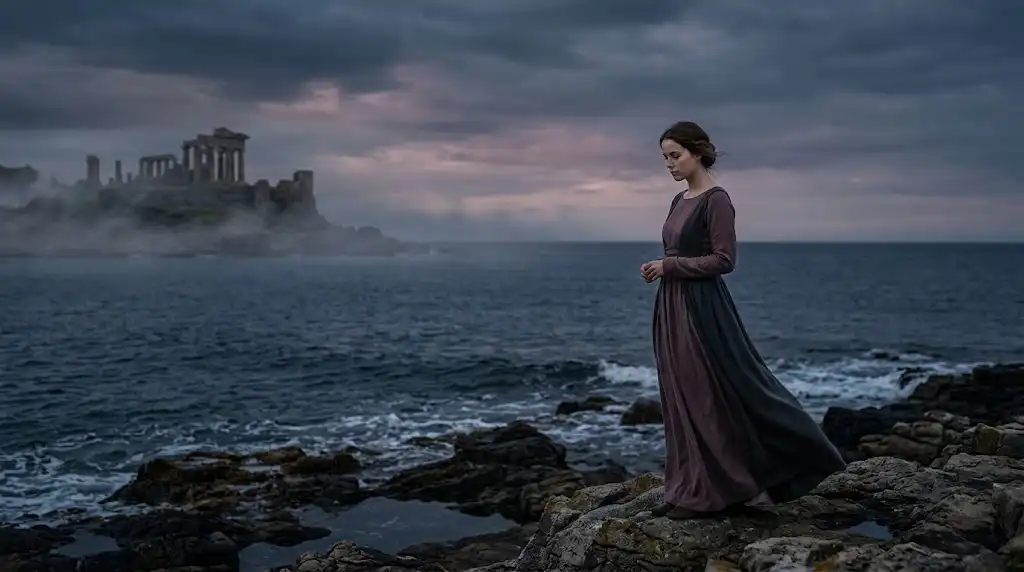
- Orpheus – meaning uncertain (Greek); the musician who lost Eurydice
- Eurydice – “wide justice” (Greek); Orpheus’s lost love
- Ophelia – “help” (Greek); Shakespeare’s heartbroken figure in Hamlet
- Juliet – feminine of Julius, often “youthful”; half of a star-crossed pair
- Romeo – “pilgrim to Rome” (Italian); the other half
- Isolde – meaning uncertain; heroine of the tragic Tristan legend
- Lenore – a form of Eleanor/Leonora; the lost beloved in Poe’s “The Raven”
- Annabel – “lovable”; inspiration for Poe’s “Annabel Lee”
- Ligeia – “clear-voiced” (Greek); title of a Poe tale of lost love
- Ulalume – coined by Poe; title of his poem of grief
- Cordelia – meaning uncertain; the loyal, doomed daughter in King Lear
- Hamlet – “small village” (Old French); Shakespeare’s grieving prince
- Heathcliff – “cliff by the heath” (English); the haunted lover of Wuthering Heights
- Estella – “star” (Latin); Pip’s unattainable love in Great Expectations
- Hester – “star” (Persian, via Esther); Hester Prynne of The Scarlet Letter
- Anna – “grace” (Hebrew); Tolstoy’s Anna Karenina
- Jude – “praised” (Hebrew); Hardy’s Jude the Obscure
- Lorelei – “murmuring rock” (German); Rhine legend of a maiden undone by heartbreak
- Undine – “little wave” (Latin unda); water spirit in a tale of love and loss
- Ariadne – “most holy” (Cretan Greek); abandoned by Theseus
- Dido – possibly “wanderer” (Phoenician); Carthage’s queen, heartbroken when Aeneas departs
- Echo – “sound” (Greek); the nymph who pined away
- Niobe – meaning uncertain; the weeping mother of Greek myth
- Demeter – possibly “grain mother” (Greek); grieved for her lost daughter
- Persephone – meaning uncertain; Demeter’s lost daughter
- Hecuba – meaning uncertain; the mourning queen of Troy
- Andromache – “man-battle” (Greek); Hector’s widow
- Antigone – “in place of a parent” (debated); Sophocles’ doomed daughter
- Electra – “amber, bright” (Greek); mourner of Agamemnon
- Alcyone – “kingfisher” (Greek); the grieving wife of myth
- Cassandra – meaning debated; the prophet no one believed
- Icarus – meaning uncertain; the boy who fell
- Phaethon – “shining” (Greek); fell from the sun-chariot
- Hyacinthus – pre-Greek; the beloved youth Apollo mourned
- Achilles – possibly “grief of the people” (Greek); his grief for Patroclus drives the Iliad
- Patroclus – “glory of the father” (Greek); the friend whose death broke Achilles
- Elaine – Old French form of Helen; Elaine of Astolat, who died of unrequited love
- Guinevere – “white phantom” (Welsh); the queen at the heart of Camelot’s fall
- Brynhild – “armored battle” (Old Norse); doomed heroine of the Völsung saga
- Baldur – “prince, lord” (Old Norse); the slain god mourned by all creation
- Freyja – “lady” (Old Norse); wept tears of gold for her lost husband
- Fionnuala – “white shoulder” (Irish); eldest of the Children of Lir, cursed into a swan
- Layla – “night” (Arabic); beloved of Majnun in the classic tale
- Majnun – “possessed, driven mad” (Arabic); the lover undone by longing
- Heer – “diamond” (Punjabi/Hindi); heroine of the Punjabi romance Heer Ranjha
- Sohni – “beautiful” (Punjabi); heroine of the tragic romance Sohni Mahiwal
- Mahiwal – “buffalo herder” (Punjabi); Sohni’s beloved
- Sassui – meaning uncertain; heroine of the Sindhi tale Sassui Punhun
- Shirin – “sweet” (Persian); heroine of Khosrow and Shirin
- Farhad – meaning debated (Persian); the legendary lover who carved through a mountain for Shirin
Poetic Names Inspired By Broken
Poetic names inspired by brokenness can turn ideas of loss and imperfection into something beautiful and meaningful. They often draw from images of shattered glass, fading memories, cracked hearts, ruins, and things left unfinished.
- Requiem – “rest” (Latin); the Mass for the dead†
- Elegy – a poem of mourning (Greek)†
- Lament – a passionate expression of grief†
- Dirge – a slow funeral song†
- Threnody – “wailing song” (Greek)†
- Nenia – funeral lament (Latin); also a Roman goddess of dirges†
- Monody – a song or poem of mourning (Greek)†
- Coronach – Highland funeral lament (Scottish Gaelic)†
- Planctus – “lament” (Latin)†
- Miserere – “have mercy” (Latin)†
- Pietà – “pity” (Italian)†
- Nocturne – a dreamy night piece (French)†
- Doloroso – “sorrowful” (Italian music term)†
- Lamentoso – “mournful” (Italian music term)†
- Mesto – “sad” (Italian music term)†
- Morendo – “dying away” (Italian music term)†
- Perdendosi – “losing itself” (Italian music term)†
- Hiraeth – “longing for a home you can’t return to” (Welsh)†
- Saudade – “nostalgic longing” (Portuguese)†
- Sehnsucht – “deep yearning” (German)†
- Weltschmerz – “world-weariness” (German)†
- Sabi – “the patina of age” (Japanese)†
- Melancholia – from Greek “black bile”; deep sadness†
- Solace – comfort in grief†
- Forlorn – “utterly abandoned”†
- Lorn – “lost, forsaken” (archaic English)†
- Fray – “to unravel”†
- Tatter – a torn scrap of cloth†
- Remnant – what remains†
- Relic – “remains” (Latin reliquiae)†
- Vestige – “footprint, trace” (Latin)†
- Wreck – ruined remains†
- Hollow – empty inside†
- Void – empty space†
- Wither – to dry up and fade†
- Ebb – to recede†
- Ember – the glowing remains of a fire†
- Cinder – a burnt fragment†
- Ash – what fire leaves behind†
- Eclipse – “abandonment” (Greek ekleipsis)†
- Dusk – twilight†
- Thorn – a sharp prickle†
- Briar – a thorny bush†
- Bramble – a thorny tangle†
- Scar – a mark left by a healed wound†
- Bruise – a discolored injury†
- Wound – an injury†
- Sorrow – deep sadness†
- Grief – sorrow after loss†
- Anguish – “tightness, distress” (Latin angustia)†
Fantasy & Gaming Names Inspired By Broken
Broken characters are often outcasts or lone survivors, and few symbols fit that role better than the wolf. For fierce, independent options in the same spirit, browse our list of female wolf names.
- Shardyn – shard + -yn
- Shardelle – shard + -elle
- Shardis – shard + -is
- Rivenna – riven + -a
- Rivenor – riven + -or
- Rivenhart – riven + heart
- Riftan – rift + -an
- Riftwyn – rift + -wyn
- Sunderlyn – sunder + -lyn
- Sundric – sunder + -ric
- Rendric – rend + -ric
- Rentara – rent (torn) + -ara
- Fissira – fissure + -ira
- Fractis – fracture + -is
- Fraylen – fray + -len
- Frayden – fray + -den
- Tornwyn – torn + -wyn
- Tornhelm – torn + helm
- Splintra – splinter + -a
- Cleavara – cleave + -ara
- Shatterlyn – shatter + -lyn
- Shattermere – shatter + mere (lake)
- Ruinelle – ruin + -elle
- Ruinor – ruin + -or
- Wrecken – wreck + -en
- Voidelle – void + -elle
- Voidric – void + -ric
- Hollowen – hollow + -en
- Hollowyn – hollow + -yn
- Scarlyn – scar + -lyn
- Scarrow – scar + -ow
- Witherra – wither + -a
- Witheran – wither + -an
- Cindra – cinder + -a
- Cinderric – cinder + -ric
- Ashborne – ash + -borne
- Emberfall – ember + fall
- Grieven – grieve + -en
- Sorrowen – sorrow + -en
- Lamentia – lament + -ia
- Requiel – requiem + -el
- Dirgen – dirge + -en
- Threnyx – threnody + -yx
- Brokenhart – broken + heart
- Halfhart – half + heart
- Crevyn – crevice + -yn
- Fragmyr – fragment + -yr
- Breachlyn – breach + -lyn
- Ruptera – Latin ruptus (broken) + -era
- Fractora – Latin fractus (broken) + -ora
Names That Mean Mended, Whole & Unbroken
Not every story about being broken has to end in darkness. Names associated with being mended, whole, restored, or unbroken can represent healing, resilience, renewal, and the strength to become whole again.
- Kintsugi – “golden joinery,” repairing pottery with gold (Japanese)†
- Kintsukuroi – “golden repair” (Japanese)†
- Jabir – “one who mends, consoles” (Arabic)
- Jabira – feminine of Jabir (Arabic)
- Shifa – “healing, cure” (Arabic)
- Shafi – “healer” (Arabic)
- Raphael – “God has healed” (Hebrew)
- Rafaella – Italian feminine of Raphael
- Asa – “healer” (Hebrew)
- Iaso – Greek goddess of recovery from illness
- Panacea – “all-healing” (Greek)
- Aceso – “healing” (Greek)
- Hygieia – “health” (Greek)
- Asclepius – Greek god of medicine; meaning uncertain
- Paeon – “healer” (Greek)
- Salus – “health, safety” (Latin)
- Reparata – “repaired, restored” (Latin)
- Restituta – “restored” (Latin)
- Renata – “reborn” (Latin)
- Renato – “reborn” (Latin/Italian)
- Anastasia – “resurrection” (Greek)
- Phoenix – the bird reborn from ashes (Greek)
- Vivian – “alive” (Latin vivus)
- Zoe – “life” (Greek)
- Chaya – “life” (Hebrew)
- Tikkun – “repair” (Hebrew)†
- Tikva – “hope” (Hebrew)
- Elpida – “hope” (Greek)
- Esperanza – “hope” (Spanish)
- Nadezhda – “hope” (Russian)
- Amal – “hope” (Arabic)
- Asha – “hope, wish” (Sanskrit)
- Akshay – “imperishable, indestructible” (Sanskrit)
- Akshit – “imperishable, unbreakable” (Sanskrit)
- Vajra – “thunderbolt, diamond” (Sanskrit); the indestructible
- Adamas – “unbreakable, untamed” (Greek)
- Adamantine – “made of adamant, incapable of being broken” (English)
- Diamond – from Greek adamas, “unbreakable”
- Ajay – “unconquerable” (Sanskrit)
- Abhaya – “fearless” (Sanskrit)
- Salim – “safe, unharmed, sound” (Arabic)
- Salima – feminine of Salim (Arabic)
- Kamil – “complete, perfect” (Arabic)
- Shalem – “whole, complete” (Hebrew)
- Tamim – “complete, whole” (Arabic)
- Ambrose – “immortal” (Greek)
- Amparo – “shelter, protection” (Spanish)
- Consuelo – “consolation” (Spanish)
- Remedios – “remedies” (Spanish)
- Socorro – “help, aid” (Spanish)
Conclusion
In exploring Names That Mean Broken, we uncover a rich tapestry of narratives that resonate with themes of loss, healing, and resilience. These names not only carry profound meanings but also serve as powerful reminders of the journeys individuals may undertake.
Each name can symbolize a unique story, whether it reflects the pain of shattered dreams or the beauty of mending hearts. As you consider these names, think about how they can encapsulate the experiences of your own life or the lives of those around you.
FAQs
Are There Names That Literally Mean “Broken”?
Yes, but very few. Documented examples include Kas-tziden (Apache, “broken foot”), Maskepetoon (Cree, “broken arm”) and Alphecca (a star name meaning “the broken”). Most other options are translations of the word or names tied to sorrow.
What Girl Names Mean Broken Heart Or Sorrow?
Dolores (“sorrows”), Trista (“sorrowful”), Bronagh (“sorrowful”), Malala (“grief-stricken”) and Mara (“bitter”) are well-documented choices.
What boy names mean sorrow or loss?
Benoni (“son of my sorrow”), Jabez (“sorrow, pain”), Ichabod (“no glory”) and Tristan (long linked with “sad”) fit best.
Is It Bad To Name A Child something with a sad meaning?
No rule says so. Many people value names with stories of endurance, like Naomi or Deirdre. If you want the same depth with a hopeful meaning, try the “Mended, Whole & Unbroken” list.
What Are God Names For A Broken Character In A Novel Or Game?
Riven, Shardyn, Tornwyn and Requiel suit fantasy. Perdita and Desdemona suit literary or gothic settings.
What Names Mean Healed Or Mended?
Jabir (“one who mends”), Raphael (“God has healed”), Reparata (“repaired”), Renata (“reborn”) and Kintsugi (“golden joinery”).